
Arts
PETER JACKSON’S HONORARY PALME D’OR AT CANNES FROM BAD TASTE TO MIDDLE EARTH
79th EDITION CANNES FILM FESTIVAL

Logo Cannes Film Festival
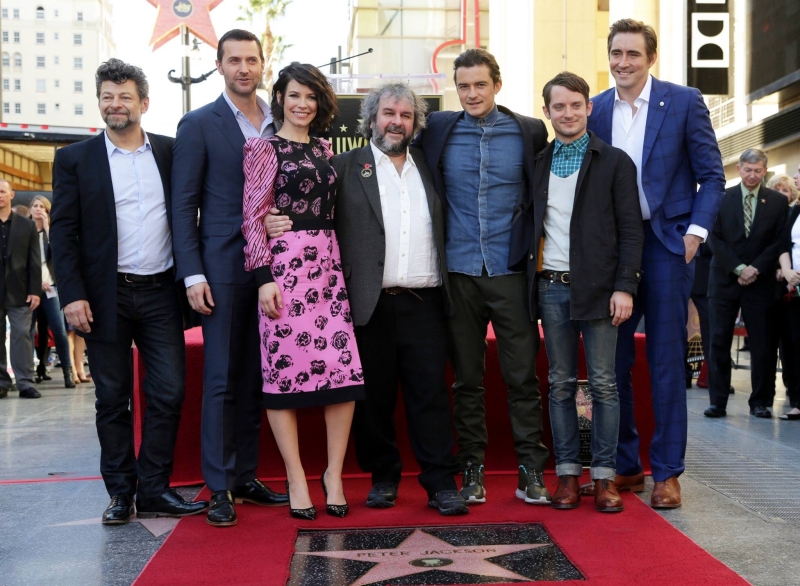
Peter Jackson / Walk Fame Hollywood
(Source: Facebook Peter Jackson Courtesy)
(Source: Facebook Peter Jackson Courtesy)
HONORARY PALME D’OR FOR A “BOLD, VISIONARY” FILMMAKER
After Agnes Varda, Marco Bellocchio, Jodie Foster, Meryl Streep and, last year, Robert De Niro, the Festival de Cannes has chosen New Zealand director Peter Jackson for its 2026 honorary Palme d’Or, saluting a body of work that bridges Hollywood franchise cinema and more personal projects with unusual artistic ambition and technological risk taking.
After Agnes Varda, Marco Bellocchio, Jodie Foster, Meryl Streep and, last year, Robert De Niro, the Festival de Cannes has chosen New Zealand director Peter Jackson for its 2026 honorary Palme d’Or, saluting a body of work that bridges Hollywood franchise cinema and more personal projects with unusual artistic ambition and technological risk taking.
HOW A NEW ZEALAND FILMMAKER REWIRED THE BLOCKBUSTER
In its announcement, the festival underlines how Jackson’s filmography, from splatter horror beginnings to epic fantasy and large scale documentaries, has helped redefine what “spectacle” can look like on the big screen without abandoning narrative or character. Jackson himself has called the honour “one of the greatest privileges of my career” and reminded audiences that Cannes “has been a meaningful part of my filmmaking journey,” from the Marché du Film with Bad Taste in 1988 to the first, breathless teaser of The Fellowship of the Ring on the Croisette in 2001.
In its announcement, the festival underlines how Jackson’s filmography, from splatter horror beginnings to epic fantasy and large scale documentaries, has helped redefine what “spectacle” can look like on the big screen without abandoning narrative or character. Jackson himself has called the honour “one of the greatest privileges of my career” and reminded audiences that Cannes “has been a meaningful part of my filmmaking journey,” from the Marché du Film with Bad Taste in 1988 to the first, breathless teaser of The Fellowship of the Ring on the Croisette in 2001.
FROM BAD TASTE TO THE CROISETTE: A LONG RELATIONSHIP WITH CANNES
For Cannes Film Festival , the honorary Palme also celebrates a relationship that predates Peter Jackson’s Hollywood years. He first came to the festival as a young filmmaker selling his low budget debut Bad Taste in the market, a splatter comedy that nevertheless demonstrated a taste for homemade effects and meticulous world building. The real turning point came in May 2001, when the festival showed 26 minutes of footage from The Lord of the Rings: The Fellowship of the Ring to buyers and the press at a time when many in the industry doubted the commercial logic of shooting three fantasy films back to back in New Zealand. That screening, held months before the global release, transformed scepticism into excitement and marked the start of a saga that would go on to dominate both the Oscars and the box office.
For Cannes Film Festival , the honorary Palme also celebrates a relationship that predates Peter Jackson’s Hollywood years. He first came to the festival as a young filmmaker selling his low budget debut Bad Taste in the market, a splatter comedy that nevertheless demonstrated a taste for homemade effects and meticulous world building. The real turning point came in May 2001, when the festival showed 26 minutes of footage from The Lord of the Rings: The Fellowship of the Ring to buyers and the press at a time when many in the industry doubted the commercial logic of shooting three fantasy films back to back in New Zealand. That screening, held months before the global release, transformed scepticism into excitement and marked the start of a saga that would go on to dominate both the Oscars and the box office.

Lord of Rings By Peter Jackson Poster
Source: Ptere Jackson Courtesy
Source: Ptere Jackson Courtesy
A TRILOGY THAT REWIRED THE “BIG LEAGUE” OF CINEMA
The Lord of the Rings trilogy is now one of the reference points for how large scale franchises are conceived and financed. Between 2001 and 2003, The Fellowship of the Ring, The Two Towers and The Return of the King accumulated a combined worldwide box office close to 3 billion dollars and collected 17 Academy Awards, including 11 Oscars for the final film a haul that places it alongside Ben Hur and Titanic in Hollywood history. Jackson’s decision to shoot the three films consecutively in New Zealand, using a mix of digital innovation and very traditional tricks of perspective, miniatures and location work, showed that a director from outside the US studio system could set the template for modern blockbuster production. That achievement, more than any single box office record, explains why Cannes now speaks of a “before” and “after” Peter Jackson in the way global fantasy and genre cinema are perceived.
The Lord of the Rings trilogy is now one of the reference points for how large scale franchises are conceived and financed. Between 2001 and 2003, The Fellowship of the Ring, The Two Towers and The Return of the King accumulated a combined worldwide box office close to 3 billion dollars and collected 17 Academy Awards, including 11 Oscars for the final film a haul that places it alongside Ben Hur and Titanic in Hollywood history. Jackson’s decision to shoot the three films consecutively in New Zealand, using a mix of digital innovation and very traditional tricks of perspective, miniatures and location work, showed that a director from outside the US studio system could set the template for modern blockbuster production. That achievement, more than any single box office record, explains why Cannes now speaks of a “before” and “after” Peter Jackson in the way global fantasy and genre cinema are perceived.
BETWEEN MIDDLE EARTH AND ARCHIVE FOOTAGE
Jackson’s trajectory since The Lord of the Rings underlines the range that Cannes wants to honour. He has alternated between large scale returns to fantasy, King Kong in 2005, then The Hobbit trilogy between 2012 and 2014, and ambitious documentary work such as They Shall Not Grow Old, which restored and colourised First World War material, or The Beatles: Get Back, a deep dive into 1969 studio sessions built from previously unseen footage. These projects rely on technology and VFX expertise developed through W?t? FX, but they also show a director interested in how to make historical images and familiar icons feel newly alive, whether in the trenches or in a London recording studio. That combination of technical edge and narrative curiosity is one reason why the festival presents him not only as a master of “larger than life” cinema but also as a storyteller who continues to move between universes rather than repeating a single formula.
Jackson’s trajectory since The Lord of the Rings underlines the range that Cannes wants to honour. He has alternated between large scale returns to fantasy, King Kong in 2005, then The Hobbit trilogy between 2012 and 2014, and ambitious documentary work such as They Shall Not Grow Old, which restored and colourised First World War material, or The Beatles: Get Back, a deep dive into 1969 studio sessions built from previously unseen footage. These projects rely on technology and VFX expertise developed through W?t? FX, but they also show a director interested in how to make historical images and familiar icons feel newly alive, whether in the trenches or in a London recording studio. That combination of technical edge and narrative curiosity is one reason why the festival presents him not only as a master of “larger than life” cinema but also as a storyteller who continues to move between universes rather than repeating a single formula.
A HANDI JOURNALIST’S VIEW FROM THE CROISETTE
For me as a wheelchair using journalist who has been covering the Cannes Film Festival for nearly two decades, this honorary Palme d’Or is also a way of measuring how the event itself has changed. Over the years I have watched Cannes Film Festival gradually broaden the range of filmmakers it celebrates, from intimate auteurs to franchise architects like Peter Jackson, and I have seen first hand how the festival’s physical and editorial spaces are slowly becoming more accessible, even if there is still a long way to go. Drawing on that long term experience on the Croisette, and on a network of programmers, producers and journalists, built film by film, I will be covering this 79th edition with the same mix of curiosity and critical distance paying attention not only to the glamour around Peter Jackson’s tribute, but also to the quieter signs of how Cannes Film Festival continues to diversify its filmography and the voices it chooses to place at the centre of the world’s biggest cinema spotlight...To be continued
For me as a wheelchair using journalist who has been covering the Cannes Film Festival for nearly two decades, this honorary Palme d’Or is also a way of measuring how the event itself has changed. Over the years I have watched Cannes Film Festival gradually broaden the range of filmmakers it celebrates, from intimate auteurs to franchise architects like Peter Jackson, and I have seen first hand how the festival’s physical and editorial spaces are slowly becoming more accessible, even if there is still a long way to go. Drawing on that long term experience on the Croisette, and on a network of programmers, producers and journalists, built film by film, I will be covering this 79th edition with the same mix of curiosity and critical distance paying attention not only to the glamour around Peter Jackson’s tribute, but also to the quieter signs of how Cannes Film Festival continues to diversify its filmography and the voices it chooses to place at the centre of the world’s biggest cinema spotlight...To be continued
Liability for this article lies with the author, who also holds the copyright. Editorial content from USPA may be quoted on other websites as long as the quote comprises no more than 5% of the entire text, is marked as such and the source is named (via hyperlink).