
Politics
250.000 Rally in Munich During Security Conference, Police Say
Lion & Sun Revolution Rises
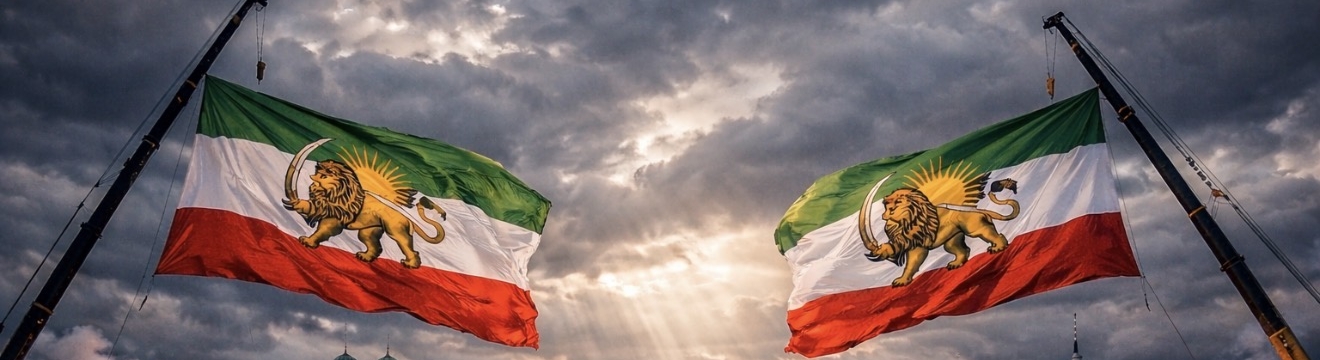
The Day Munich Trembled (Source: Saman Hajibabaei)
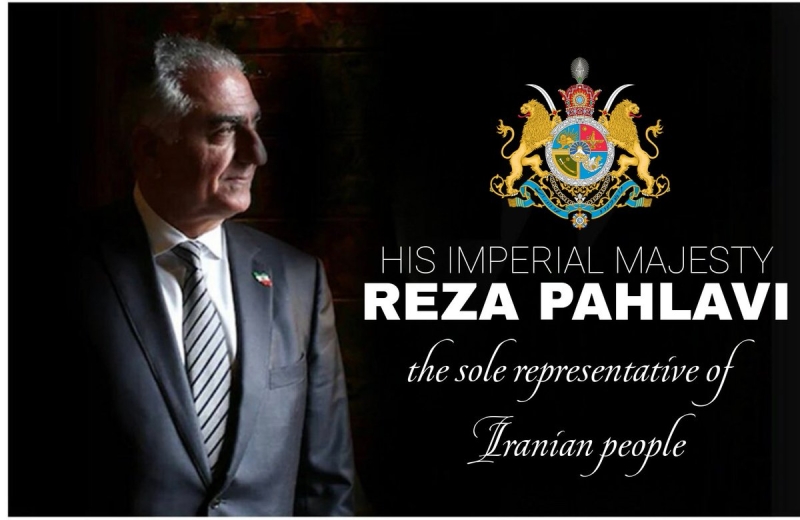
King Reza Pahlavi
(February 14, 2026)
On 14 February 2026, during the Munich Security Conference, approximately 250,000 participants gathered in Munich, according to official police estimates, in what became one of the largest Iranian diaspora demonstrations held in Europe in recent years.
At Theresienwiese, large cranes hoisted Lion and Sun flags — historic symbols associated with Iran’s pre-1979 national identity — above the crowd. Traditional drums accompanied chants of “King Reza Pahlavi,” “Regime Change,” “Long Live the Shah,” and “Free Iran,” while the demonstration unfolded within sight and earshot of the annual Munich Security Conference.
Participants traveled from across Germany, other European states, the United States, and Canada. Organizers framed the event not merely as a protest, but as part of a broader political movement aimed at internationalizing Iran’s internal crisis and placing it squarely on the European security agenda.
This revolution is the voice of millions of Iranians inside the country who cannot raise their voices under bullets, torture, and targeted killings; today, we abroad are carrying their voice to the ears of world leaders.
Prince Reza Pahlavi, the son of Cyrus the Great and heir to the legacy of Aryamehr, did not merely speak at the conference; he positioned himself as a leading figure in Iran’s national movement. Facing U.S. senators such as Lindsey Graham, European Parliament President Roberta Metsola, and global figures like Volodymyr Zelenskyy, he presented a roadmap for the transition period: a secular, democratic Iran with genuine elections — not staged performances — where the people’s vote, not the Supreme Leader, determines the political system.
He stated repeatedly: “I am not seeking a crown or throne; I am seeking to save Iran. Let the ballot box decide the future system.”
The crowd responded: We want him. We recognize him. He is our alternative.
This moment is more than a protest; it marks the beginning of a movement that seeks to restore the Lion and Sun to the pinnacle of Iran’s national identity.
Prince Reza Pahlavi, the son of Cyrus the Great and heir to the legacy of Aryamehr, did not merely speak at the conference; he positioned himself as a leading figure in Iran’s national movement. Facing U.S. senators such as Lindsey Graham, European Parliament President Roberta Metsola, and global figures like Volodymyr Zelenskyy, he presented a roadmap for the transition period: a secular, democratic Iran with genuine elections — not staged performances — where the people’s vote, not the Supreme Leader, determines the political system.
He stated repeatedly: “I am not seeking a crown or throne; I am seeking to save Iran. Let the ballot box decide the future system.”
The crowd responded: We want him. We recognize him. He is our alternative.
This moment is more than a protest; it marks the beginning of a movement that seeks to restore the Lion and Sun to the pinnacle of Iran’s national identity.
A revolution that seeks not only to free Iran, but also to reduce regional instability in the Middle East, mitigate nuclear proliferation risks, and contribute to greater stability in global energy markets.
But why does this revolution matter to you, the people of Germany and Europe?
Why is supporting it not merely a moral position, but a strategic consideration linked to the security of your families, the integrity of your borders, and the future of your children?
In this article, drawing on verified data, historical precedents, economic and security analysis, and realistic migration models, I outline how recognizing Reza Pahlavi and advocating for political change in Iran could have direct implications for European stability and prosperity.
But why does this revolution matter to you, the people of Germany and Europe?
Why is supporting it not merely a moral position, but a strategic consideration linked to the security of your families, the integrity of your borders, and the future of your children?
In this article, drawing on verified data, historical precedents, economic and security analysis, and realistic migration models, I outline how recognizing Reza Pahlavi and advocating for political change in Iran could have direct implications for European stability and prosperity.
Are you ready to be part of this change?
The Bloody Reality: Why the Regime’s Continuation Carries Severe RisksJanuary 2026 marked one of the deadliest episodes in modern Iranian history.
Economic protests triggered by hyperinflation and the collapse of the rial escalated into a nationwide uprising. The authorities responded with coordinated and widespread use of lethal force, particularly on January 8 and 9.
Available casualty figures — compiled despite internet blackouts, restricted access to hospitals, and reported intimidation of victims’ families — reveal methodological discrepancies that require clarification in order to preserve analytical credibility.
These discrepancies stem primarily from differences in data-collection methodology. Some sources, such as HRANA, rely on individual identity verification and documented, named victims. Others, including outlets like Iran International, draw on leaked internal documents, medical baselines, or aggregated institutional reporting.
The state has historically underreported casualties, while access limitations — including communication shutdowns and pressure on families — make independent verification difficult and may result in higher estimated figures.
In political analysis, numerical discrepancies can affect credibility.
With methodological transparency, however, these figures should be viewed as complementary, indicating a verified minimum and a plausible upper range.
Amnesty International (26 January 2026) reported thousands killed, noting that the actual toll is likely higher due to suppression (method: eyewitness and media-based estimates).
https://www.amnesty.org/en/latest/campaigns/2026/01/what-happened-at-the-protests-in-iran
Human Rights Watch (16 January 2026) documented countrywide killings after January 8, with gunshot wounds to the head and torso predominating (method: direct interviews with witnesses and medical personnel).
https://www.hrw.org/news/2026/01/16/iran-growing-evidence-of-countrywide-massacres
HRANA (27 January 2026) confirmed at least 6,126 deaths, including 5,777 protesters and minors (method: individual identity verification via activist networks).
https://www.npr.org/2026/01/27/nx-s1-5689793/6-126-iran-crackdown-protests-death-toll
Iran International (25 January 2026) reported over 36,500 deaths on January 8–9 (method: leaked internal documents and medical-source estimates).
With methodological transparency, however, these figures should be viewed as complementary, indicating a verified minimum and a plausible upper range.
Amnesty International (26 January 2026) reported thousands killed, noting that the actual toll is likely higher due to suppression (method: eyewitness and media-based estimates).
https://www.amnesty.org/en/latest/campaigns/2026/01/what-happened-at-the-protests-in-iran
Human Rights Watch (16 January 2026) documented countrywide killings after January 8, with gunshot wounds to the head and torso predominating (method: direct interviews with witnesses and medical personnel).
https://www.hrw.org/news/2026/01/16/iran-growing-evidence-of-countrywide-massacres
HRANA (27 January 2026) confirmed at least 6,126 deaths, including 5,777 protesters and minors (method: individual identity verification via activist networks).
https://www.npr.org/2026/01/27/nx-s1-5689793/6-126-iran-crackdown-protests-death-toll
Iran International (25 January 2026) reported over 36,500 deaths on January 8–9 (method: leaked internal documents and medical-source estimates).
UN Special Rapporteur on Iran (Mai Sato, 16 January 2026):
At least 5,000 killed; medical estimates reach up to 20,000 (based on medical and international sources, including unreported cases).
Methodological differences — individual verification (HRANA) versus internal or medical estimates (Iran International and the UN) — are typical under blackout conditions.
HRANA’s figure reflects a verified minimum; higher estimates attempt to capture concealed cases. The regime’s official total of 3,117 is widely viewed as an undercount (comparable to 2019, when official figures were far below independent estimates).
These discrepancies, when contextualized, underscore the scale of the crisis. Beyond statistics, they represent civilians shot, women tortured, and bystanders targeted. The regime has also been linked to more than 360 extraterritorial assassinations since 1979 (U.S. State Department data).
Negotiations such as the JCPOA and Vienna talks provided financial relief that critics argue enabled continued missile development, drone expansion, and domestic repression.
At least 5,000 killed; medical estimates reach up to 20,000 (based on medical and international sources, including unreported cases).
Methodological differences — individual verification (HRANA) versus internal or medical estimates (Iran International and the UN) — are typical under blackout conditions.
HRANA’s figure reflects a verified minimum; higher estimates attempt to capture concealed cases. The regime’s official total of 3,117 is widely viewed as an undercount (comparable to 2019, when official figures were far below independent estimates).
These discrepancies, when contextualized, underscore the scale of the crisis. Beyond statistics, they represent civilians shot, women tortured, and bystanders targeted. The regime has also been linked to more than 360 extraterritorial assassinations since 1979 (U.S. State Department data).
Negotiations such as the JCPOA and Vienna talks provided financial relief that critics argue enabled continued missile development, drone expansion, and domestic repression.
The U.S. “maximum pressure” campaign under President Trump — including expanded economic sanctions and the January 2020 targeted killing of IRGC Quds Force commander Qassem Soleimani — significantly increased economic strain on Iran’s government and constrained portions of its regional operational capacity.
However, the policy was not sustained beyond the initial phase, and sanctions enforcement fluctuated over time. While the measures intensified financial pressure and reduced state revenues, they did not produce structural political change. Over time, the Iranian authorities adapted through alternative trade channels, regional networks, and internal consolidation, regaining operational stability while maintaining domestic control through repression.
However, the policy was not sustained beyond the initial phase, and sanctions enforcement fluctuated over time. While the measures intensified financial pressure and reduced state revenues, they did not produce structural political change. Over time, the Iranian authorities adapted through alternative trade channels, regional networks, and internal consolidation, regaining operational stability while maintaining domestic control through repression.
The Ready Alternative: Reza Pahlavi’s Roadmap
Reza Pahlavi does not seek a crown; he presents himself as a facilitator of transition.The Iran Prosperity Project (IPP) — Emergency Phase (first 100–180 days, released in July 2025) — outlines a structured framework:
Political and legal: Formation of a National Uprising Council, establishment of a transitional government, constitutional referendum, and free elections.
Security: Dismantling the IRGC’s repressive core, integrating professional forces into a national army, and encouraging defections to reduce coup risk.
Nuclear: Full transparency with the IAEA, suspension of military dimensions, and international monitoring.
Economic: Restoration of essential services, sanctions relief, release of frozen assets (estimated $120–150 billion), and attraction of diaspora investment.
This framework differs from the Libya or Iraq scenarios. Iran possesses a relatively cohesive national identity, an educated population, and a significant diaspora network.
The IPP was developed by experts inside and outside Iran and emphasizes institutional continuity to prevent a power vacuum.
Irregular Migration Realistic Model Focusing on Key Corridors
Irregular migration is a politically sensitive issue in Germany, with BAMF and the BKA closely monitoring risk projections.Continued repression and economic decline remain structural drivers of outward migration. A managed transition could reduce long-term pressure.
Projected short-term outflow (3–6 months):
Based on 2024–2025 trends (Migration Policy Institute, IOM, EUAA), displacement may range from 200,000 to 800,000 individuals, not all bound for Turkey or Europe.
Initial departures would likely stem from urban middle- and upper-income groups (Tehran, Isfahan, Shiraz) with financial means and diaspora links. Rural migration would likely be slower.
Demographic pattern:
Approximately 60–70% male, predominantly aged 18–34; around 50–60% single men, with 30–40% family units moving later through legal or reunification channels.
Primary Regions of Origin
Irregular departures would likely emerge from three clusters. The northwest (Tabriz, Urmia, Kurdish areas) is significant due to geographic proximity to Turkey and established cross-border networks. Sistan and Baluchestan (Zahedan) connects to Pakistan and Afghanistan routes, though historically with lower volumes due to distance and security risks.
Major urban centers such as Tehran and Isfahan remain key sources, as financially capable and professionally trained populations have greater access to air and visa-based exits.
Main Irregular Corridors
The northwestern land route runs from Tabriz via Bazargan or Razi toward Van or Igdir in Turkey, supported by ethnic and commercial networks and shaped by Turkish border controls. The southeastern route moves from Zahedan to Mirjaveh and into Pakistan, with potential onward movement toward Turkey, typically lower in volume but relevant under prolonged instability. A third corridor operates via air travel from Tehran or Isfahan to Istanbul, followed by secondary movement through Greece or the Western Balkans into the EU, primarily accessible to middle-income urban populations.
Irregular departures would likely emerge from three clusters. The northwest (Tabriz, Urmia, Kurdish areas) is significant due to geographic proximity to Turkey and established cross-border networks. Sistan and Baluchestan (Zahedan) connects to Pakistan and Afghanistan routes, though historically with lower volumes due to distance and security risks.
Major urban centers such as Tehran and Isfahan remain key sources, as financially capable and professionally trained populations have greater access to air and visa-based exits.
Main Irregular Corridors
The northwestern land route runs from Tabriz via Bazargan or Razi toward Van or Igdir in Turkey, supported by ethnic and commercial networks and shaped by Turkish border controls. The southeastern route moves from Zahedan to Mirjaveh and into Pakistan, with potential onward movement toward Turkey, typically lower in volume but relevant under prolonged instability. A third corridor operates via air travel from Tehran or Isfahan to Istanbul, followed by secondary movement through Greece or the Western Balkans into the EU, primarily accessible to middle-income urban populations.
Key Point: Iran’s Role as Transit Route for Afghans to Europe
Iran functions as a major transit corridor for Afghan irregular migration toward Europe. Numerous monitoring reports indicate that Afghan nationals frequently cross Iranian territory en route to Turkey and subsequently the European Union.According to the IOM Asia–Pacific Factsheet on mixed migration routes (2025), Afghans accounted for approximately 32 percent of irregular arrivals from the Asia–Pacific region to Europe, with Iran often serving as the first transit point before onward movement to Turkey.
The Mixed Migration Centre (2025) identifies the Eastern Mediterranean route (Iran–Turkey–Greece) as a principal pathway, with Afghan and Syrian migrants reporting significant protection risks along the route.
UNHCR and IOM reporting (2025) further note that Iran hosts millions of Afghan nationals, some of whom subsequently attempt onward migration to Europe.
Large-scale forced returns from Iran and Pakistan to Afghanistan — exceeding five million individuals in 2025 — have added additional migratory pressure across the region.
Any structural change affecting transit dynamics within Iran would therefore have implications for broader irregular migration flows toward Europe.
Turkey as Buffer – Realistic & with Proposed Mechanisms
Turkey hosts approximately 3.8 million Afghans and 2.3 million Syrians (UNHCR 2025) and has reinforced its eastern border with a 380-kilometer barrier supported by surveillance infrastructure and drone monitoring.Recent reporting suggests contingency planning for expanded buffer measures along the Iranian frontier to limit secondary movement into Turkish territory.
Domestic economic pressures, the approaching 2028 electoral cycle, Kurdish security dynamics, and complex EU relations constrain Ankara’s flexibility. The 2015–2016 crisis demonstrated Turkey’s ability to use migration flows as political leverage.
For Berlin, a structured EU–Turkey coordination framework remains essential. Building on the 2016 agreement and subsequent mechanisms, €1–2 billion from the EU’s 2026 migration allocation could support reception capacity, logistics, and voluntary return programs, complemented by an expanded Frontex monitoring role along the Turkey–Iran border.
A viable funding model would combine rapid-access disbursements from EU instruments such as AMIF and BMVI with targeted bilateral Germany–Turkey financial arrangements to support reception facilities, border logistics, and voluntary return programs. Disbursement should be conditional on strict compliance with international humanitarian standards, including independent monitoring mechanisms and full adherence to the principle of non-refoulement.
Such a framework would reduce the risk of political leverage associated with unmanaged migration flows. Turkey would benefit from financial support, burden-sharing, and the longer-term economic dividends of regional stabilization, including trade and energy normalization. The European Union, in turn, would gain greater predictability, operational oversight, and strategic control over migration management dynamics.
Such a framework would reduce the risk of political leverage associated with unmanaged migration flows. Turkey would benefit from financial support, burden-sharing, and the longer-term economic dividends of regional stabilization, including trade and energy normalization. The European Union, in turn, would gain greater predictability, operational oversight, and strategic control over migration management dynamics.
Timeline for Stabilization & Impact on Irregular Migration
The Iran Prosperity Project (IPP) proposes a 100–180 day stabilization framework following political transition.In the first 30 days, the priority would be preventing systemic panic through institutional continuity, partial sanctions relief, and the release of frozen assets (estimated $120–150 billion) to stabilize currency and essential imports.
Between months one and three, efforts would focus on restoring public services, reactivating administrative structures, securing borders through security realignments, and initiating regional coordination, including engagement with Turkey on migration management.
By months three to six, attention would shift to job creation, early foreign and diaspora investment, and gradual economic normalization, potentially stabilizing or reversing outward migration pressures.
Without transition, continued deterioration risks institutional paralysis within months. Under a managed stabilization process, acute volatility would likely be shorter, followed by faster economic and migratory rebalancing.
Conclusion
A potential initial surge in irregular movement during the first one to three months could be contained and managed through advance coordination with Turkey, including expanded Frontex monitoring and reinforced reception capacity.Over the longer term, structural stabilization inside Iran — employment recovery, institutional continuity, and economic normalization — would address the root drivers of outward migration and could gradually shift flows toward net return rather than sustained departure.
By contrast, continuation of the current trajectory implies persistent instability and recurrent migration pressure.
Munich signaled that developments inside Iran are no longer peripheral to European security calculations. Calibrated engagement, contingency planning, and structured support mechanisms would reduce strategic risk and enhance policy leverage.
Germany now faces a strategic choice: react to recurring crises — or help shape the conditions that prevent them.

Rise of the Phoenix of Freedom
Source: Saman Hajibabaei
Source: Saman Hajibabaei
Liability for this article lies with the author, who also holds the copyright. Editorial content from USPA may be quoted on other websites as long as the quote comprises no more than 5% of the entire text, is marked as such and the source is named (via hyperlink).