Politics
FRANCE’S OVERSEAS MINISTER NAIMA MOUTCHOU SETS OUT AN EFFECTIVE 100 DAY ROADMAP
FOR A STRATEGIC MARITIME REPUBLIC
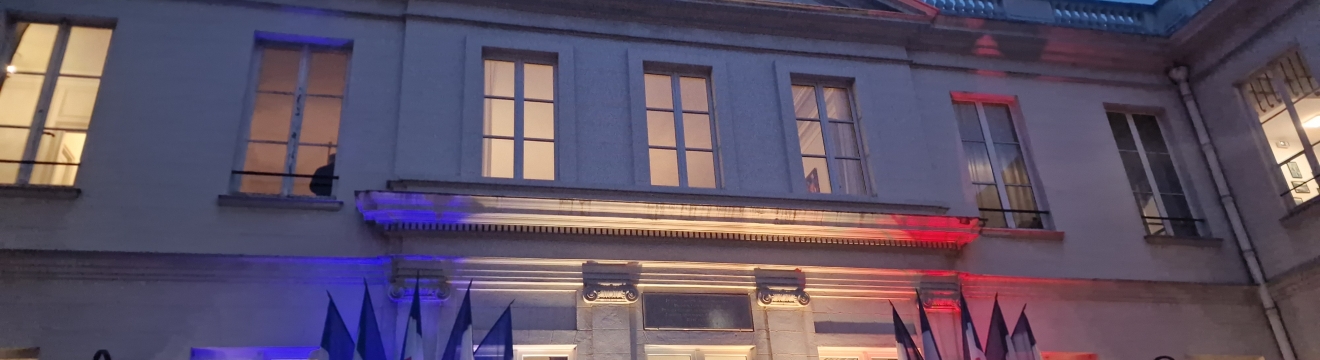
French Ministry of Overseas Territoires (MOM) (Source: Rahma Sophia Rachdi, Jedi Foster)
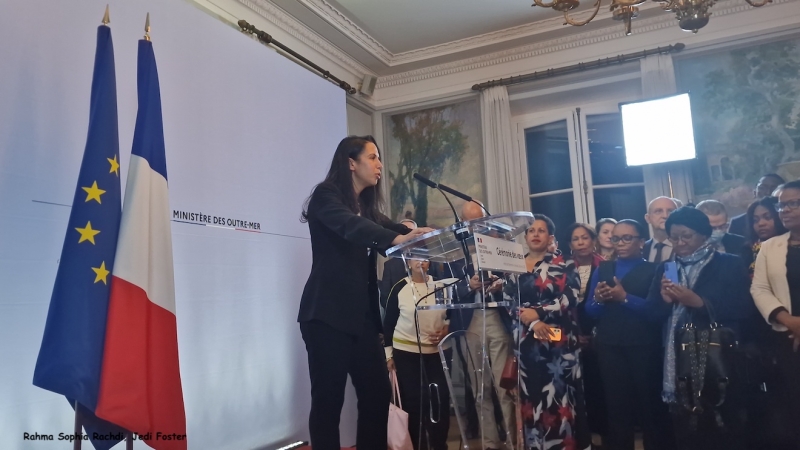
French Minister for Overseas Naima Moutchou
(Source: Rahma Sophia rachdi Jedi Foster)
(Source: Rahma Sophia rachdi Jedi Foster)
France’s overseas territories place the country among the world’s leading maritime powers, with a vast exclusive economic zone stretching from the Caribbean and South America to the Indian and Pacific Oceans. In this context of renewed global tension, the new minister for Overseas France, Naima Moutchou, used her New Year ceremony at rue Oudinot to insist that her portfolio is fully sovereign and central to French strategy. In her words, the ministry is responsible for maritime routes, strategic borders and zones of influence that make France a power on three continents, from French Guiana and the Caribbean to Reunion, Mayotte, Martinique, Guadeloupe and Saint Pierre et Miquelon.(Article written by Rahma, a wheelchair using journalist who attended the ceremony in person and wishes to thank the staff of the Ministry for Overseas France and the Delicatessen catering team for their kindness in helping her access the reception hall.)
A SOVEREIGN MINISTRY, NOT A “COMPLEMENT”
From the very first lines of her speech, Naima Moutchou set the tone: “This is not a complementary ministry; it is a sovereign ministry,” she told ministers, elected officials and journalists gathered at the Overseas Ministry. In her words, the ministry is responsible for maritime routes, strategic borders and zones of influence that make France a power on three continents, from French Guiana and the Caribbean to Reunion, Mayotte, Martinique, Guadeloupe and Saint Pierre et Miquelon. She presented this arc of territories as a coherent strategic space that must be protected and invested in, not treated as a periphery
From the very first lines of her speech, Naima Moutchou set the tone: “This is not a complementary ministry; it is a sovereign ministry,” she told ministers, elected officials and journalists gathered at the Overseas Ministry. In her words, the ministry is responsible for maritime routes, strategic borders and zones of influence that make France a power on three continents, from French Guiana and the Caribbean to Reunion, Mayotte, Martinique, Guadeloupe and Saint Pierre et Miquelon. She presented this arc of territories as a coherent strategic space that must be protected and invested in, not treated as a periphery
THREE MONTHS IN OFFICE, A DIFFICULT YEAR BEHIND AND A HARD ONE AHEAD
Moutchou reminded the audience that she has been in office for only three months, after a 2025 that she described as “difficult” and ahead of a 2026 that will be demanding as well. Minister Moutchou refused to promise the impossible: “I am not here to promise what I cannot keep,” she said, adding that she does not believe in “grand evenings” but in “a succession of small mornings”. Since arriving at the Ministry for Overseas France (MOM), her days, she explained, have been organised around “crucial stages”, always starting where the emergency is, rather than simply trying to “cover up fractures”.
Moutchou reminded the audience that she has been in office for only three months, after a 2025 that she described as “difficult” and ahead of a 2026 that will be demanding as well. Minister Moutchou refused to promise the impossible: “I am not here to promise what I cannot keep,” she said, adding that she does not believe in “grand evenings” but in “a succession of small mornings”. Since arriving at the Ministry for Overseas France (MOM), her days, she explained, have been organised around “crucial stages”, always starting where the emergency is, rather than simply trying to “cover up fractures”.
NEW CALEDONIA: FROM “ALREADY LOST” TO CONSTITUTIONAL TEXTS
One of those emergencies was New Caledonia. When she took office, Minister Moutchou heard many voices saying that the situation there was “unmanageable” and “already lost”. She chose to focus instead on “the desire of Caledonians to get out of it”, stressing that this required transparency and a restored link of trust. At the request of the President of the Republic, a broad meeting was held in January bringing together all political forces; for 34 days, representatives from every side worked on new arrangements. The outcome, she recalled, is two key texts: a constitutional package giving full legal effect to the new institutional compromise, and a revised financial protocol negotiated with the Prime Minister, which she will now defend before Parliament, beginning with the Senate.
One of those emergencies was New Caledonia. When she took office, Minister Moutchou heard many voices saying that the situation there was “unmanageable” and “already lost”. She chose to focus instead on “the desire of Caledonians to get out of it”, stressing that this required transparency and a restored link of trust. At the request of the President of the Republic, a broad meeting was held in January bringing together all political forces; for 34 days, representatives from every side worked on new arrangements. The outcome, she recalled, is two key texts: a constitutional package giving full legal effect to the new institutional compromise, and a revised financial protocol negotiated with the Prime Minister, which she will now defend before Parliament, beginning with the Senate.
MAYOTTE: REBUILDING AFTER CYCLONE CHIDO
The minister then turned to Mayotte, marked by the devastating passage of cyclone Chido. She described the event as “a terrible ordeal”, leaving “urgent needs and scars” across the territory. During her visit in December, she said, she saw that reconstruction is not only about housing and roads, but also about economic life, education, and social stability. She recalled that four billion euros have been committed since 2025, funding that has been secured with the support of the Prime Minister and largely earmarked; the challenge now is the concrete implementation on the ground by the state, the special public establishment and local agencies.
The minister then turned to Mayotte, marked by the devastating passage of cyclone Chido. She described the event as “a terrible ordeal”, leaving “urgent needs and scars” across the territory. During her visit in December, she said, she saw that reconstruction is not only about housing and roads, but also about economic life, education, and social stability. She recalled that four billion euros have been committed since 2025, funding that has been secured with the support of the Prime Minister and largely earmarked; the challenge now is the concrete implementation on the ground by the state, the special public establishment and local agencies.
THE HIGH COST OF LIVING: A DAILY REALITY
Minister Naima Moutchou devoted a significant part of her address to what she called “the daily reality of millions of citizens”: the high cost of living in the overseas territories. She insisted that it is unacceptable that, depending on the territory, price gaps can reach up to 45% for certain products compared with mainland France. The Prime Minister, she noted, has launched a reform process that will go before Parliament to make the mechanisms on margins and rentes more effective, backed by stronger, more operational consultation with economic actors. The final budget “copy” provides an additional 500 million euros in the Social Security Financing Act and one billion euros in the main finance bill for the overseas territories, and the minister now wants to move from budget votes to execution.
Minister Naima Moutchou devoted a significant part of her address to what she called “the daily reality of millions of citizens”: the high cost of living in the overseas territories. She insisted that it is unacceptable that, depending on the territory, price gaps can reach up to 45% for certain products compared with mainland France. The Prime Minister, she noted, has launched a reform process that will go before Parliament to make the mechanisms on margins and rentes more effective, backed by stronger, more operational consultation with economic actors. The final budget “copy” provides an additional 500 million euros in the Social Security Financing Act and one billion euros in the main finance bill for the overseas territories, and the minister now wants to move from budget votes to execution.
TOWARDS A NEW ECONOMIC FRAMEWORK AND A GRAND OVERSEAS FORUM
Beyond emergencies, the minister Moutchou, outlined a longer term economic agenda. She announced the preparation of a clearer and more readable reform of economic tools, including a mission on MODEOM that will be led by a recognized personality. In parallel, she intends to work on a broader orientation law to give the overseas territories a stable direction and continuity, “beyond political calendars”. By the end of the year, she plans to establish a regular economic meeting and, above all, to create a GRAND OVERSEAS ECONOMIC FORUM, a major event she wants to turn into a lever of power and influence for all the overseas territories.
Beyond emergencies, the minister Moutchou, outlined a longer term economic agenda. She announced the preparation of a clearer and more readable reform of economic tools, including a mission on MODEOM that will be led by a recognized personality. In parallel, she intends to work on a broader orientation law to give the overseas territories a stable direction and continuity, “beyond political calendars”. By the end of the year, she plans to establish a regular economic meeting and, above all, to create a GRAND OVERSEAS ECONOMIC FORUM, a major event she wants to turn into a lever of power and influence for all the overseas territories.
SECURITY AND NARCOTRAFFICKING: REFUSING TO LET TRAFFICS DESTROY SOCIETY
Another central theme of the speech was security, particularly narcotrafficking. Moutchou denounced the instability caused by these traffics and explained that she has asked for all overseas territories to be fully included in the national roadmap against narcotics. She said she “refuses that these traffics come to destroy our society and our youth” and stressed the importance of protecting local populations as part of a broader assertion of state authority and sovereignty.
Another central theme of the speech was security, particularly narcotrafficking. Moutchou denounced the instability caused by these traffics and explained that she has asked for all overseas territories to be fully included in the national roadmap against narcotics. She said she “refuses that these traffics come to destroy our society and our youth” and stressed the importance of protecting local populations as part of a broader assertion of state authority and sovereignty.
PREPARING INSTITUTIONAL FUTURES AND FOCUSING ON YOUTH
The minister also insisted that a sovereign ministry must “have a trajectory” and prepare future institutional evolutions where they are desired. At the request of the President of the French Republic, she has been tasked with setting up working groups with French Guiana, Guadeloupe and Martinique to improve the lives of citizens while respecting each territory’s history and sensitivities. This forward looking work is closely linked to what she presented as a personal commitment: building opportunities for young people in the overseas territories. She recalled that she is the eleventh overseas minister since 2017 and that she “wanted this ministry”, as a lawyer strongly attached to equality of opportunity.
The minister also insisted that a sovereign ministry must “have a trajectory” and prepare future institutional evolutions where they are desired. At the request of the President of the French Republic, she has been tasked with setting up working groups with French Guiana, Guadeloupe and Martinique to improve the lives of citizens while respecting each territory’s history and sensitivities. This forward looking work is closely linked to what she presented as a personal commitment: building opportunities for young people in the overseas territories. She recalled that she is the eleventh overseas minister since 2017 and that she “wanted this ministry”, as a lawyer strongly attached to equality of opportunity.
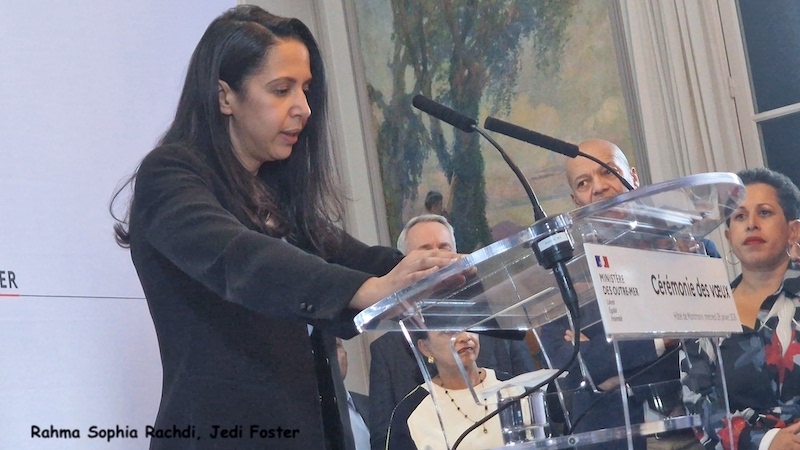
French Minister for overseas Naima Moutchou
Source: Rahma Sophia Rachdi, Jedi Foster
Source: Rahma Sophia Rachdi, Jedi Foster
NAIMA MOUTCHOU: A LAWYER’S PATH TO A SOVEREIGN PORTFOLIO
Naima Moutchou’s own biography frames her approach. Born in 1980 in Ermont, Val d’Oise, to a Franco Moroccan family, she grew up in Eaubonne and studied law at the University of Cergy Pontoise and Paris Pantheon Assas, specialising in business and international commercial law. She joined the Paris bar in 2008, worked with the bâtonnier Christian Charriere Bournazel in business and media law, and became involved in the legal commission of LICRA. Elected MP for Val d’Oise in 2017 under the banner of La Republique en marche, she held key positions in the National Assembly’s Law Committee, served as vice president of the Assembly from 2022 to 2025 after joining Edouard Philippe’s Horizons party, and entered government in 2025 before being appointed minister for Overseas France in the second Lecornu cabinet.
Naima Moutchou’s own biography frames her approach. Born in 1980 in Ermont, Val d’Oise, to a Franco Moroccan family, she grew up in Eaubonne and studied law at the University of Cergy Pontoise and Paris Pantheon Assas, specialising in business and international commercial law. She joined the Paris bar in 2008, worked with the bâtonnier Christian Charriere Bournazel in business and media law, and became involved in the legal commission of LICRA. Elected MP for Val d’Oise in 2017 under the banner of La Republique en marche, she held key positions in the National Assembly’s Law Committee, served as vice president of the Assembly from 2022 to 2025 after joining Edouard Philippe’s Horizons party, and entered government in 2025 before being appointed minister for Overseas France in the second Lecornu cabinet.
FACING RACIST ATTACKS, ASKING TO BE JUDGED ON ACTION
In her conclusion, Moutchou adopted a very personal tone. She recalled the “wave of racist and sexist attacks” she has faced since her appointment, including a comment from an elected official who claimed her nomination was “a spit” in the face of the overseas ministry. Rather than dwell on these insults, she chose to sum up what has been achieved in her first hundred days: an agreement on New Caledonia, a budget for the overseas territories, and the launch of institutional work in several regions. “I am not asking to be judged on what I am, but on what I do,” she insisted, before closing with a republican tribute “Long live Oudinot and long live the Republic” and inviting guests to share a glass of friendship.
In her conclusion, Moutchou adopted a very personal tone. She recalled the “wave of racist and sexist attacks” she has faced since her appointment, including a comment from an elected official who claimed her nomination was “a spit” in the face of the overseas ministry. Rather than dwell on these insults, she chose to sum up what has been achieved in her first hundred days: an agreement on New Caledonia, a budget for the overseas territories, and the launch of institutional work in several regions. “I am not asking to be judged on what I am, but on what I do,” she insisted, before closing with a republican tribute “Long live Oudinot and long live the Republic” and inviting guests to share a glass of friendship.
FAST TOP DIPLOMACY FOR A MARITIME REPUBLIC
In barely three months, Naima Moutchou has begun to sketch a form of fast, pragmatic diplomacy applied to France’s own maritime and insular spaces: quick visits where the emergency is, negotiated texts on New Caledonia, secured funding for Mayotte, and an agenda that links cost of living, security and long term institutional reform. In a world where power struggles increasingly play out at sea and where traditional multilateral frameworks are under strain, her message is that France’s overseas territories are not a secondary issue but a central pillar of the Republic’s sovereignty. The coming months will show whether this early momentum can be sustained and translated into tangible improvements on the ground, and whether the overseas ministry will finally be recognized, in Paris and beyond, as the strategic ministry she claims it to be
In barely three months, Naima Moutchou has begun to sketch a form of fast, pragmatic diplomacy applied to France’s own maritime and insular spaces: quick visits where the emergency is, negotiated texts on New Caledonia, secured funding for Mayotte, and an agenda that links cost of living, security and long term institutional reform. In a world where power struggles increasingly play out at sea and where traditional multilateral frameworks are under strain, her message is that France’s overseas territories are not a secondary issue but a central pillar of the Republic’s sovereignty. The coming months will show whether this early momentum can be sustained and translated into tangible improvements on the ground, and whether the overseas ministry will finally be recognized, in Paris and beyond, as the strategic ministry she claims it to be
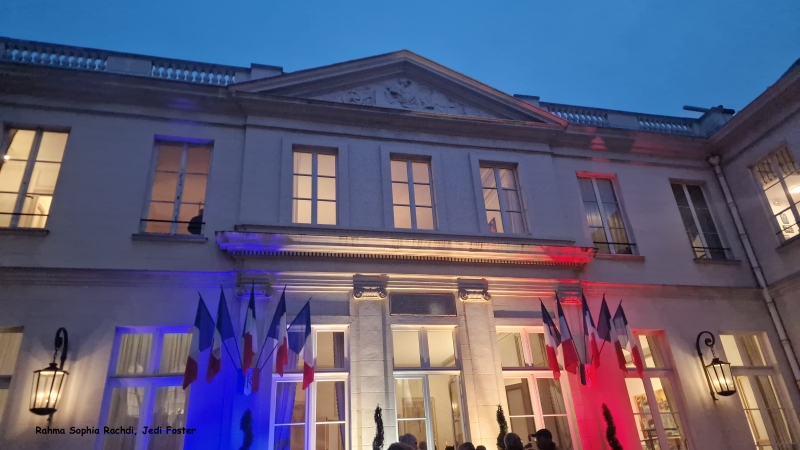
French Ministry of Overseas
Source: Rahma Sophia Rachdi, Jedi Foster
Source: Rahma Sophia Rachdi, Jedi Foster
Liability for this article lies with the author, who also holds the copyright. Editorial content from USPA may be quoted on other websites as long as the quote comprises no more than 5% of the entire text, is marked as such and the source is named (via hyperlink).